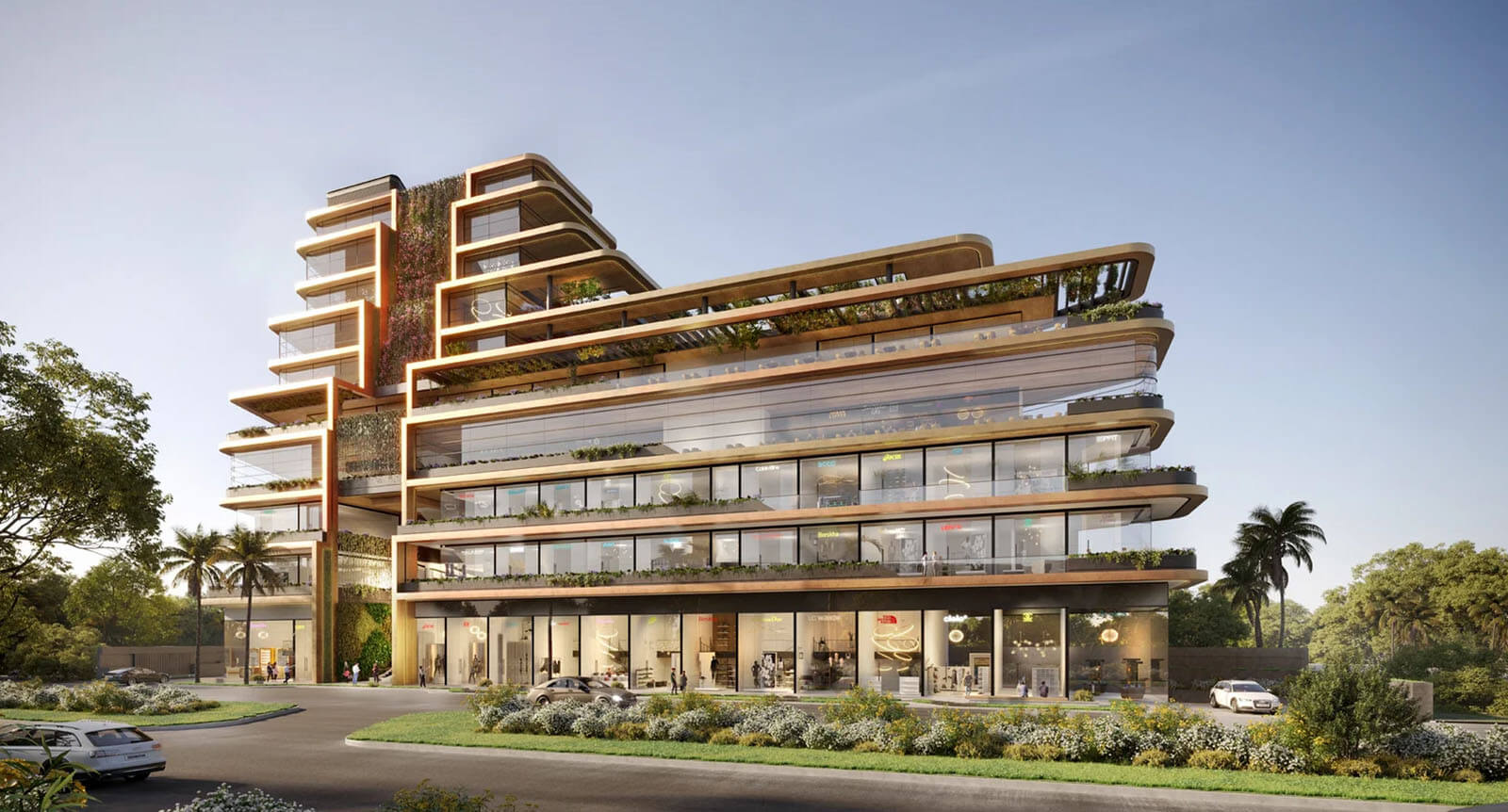
From Darshan to Destination: How Raya Heritage Centre Could Redefine the Mathura–Vrindavan Temple Town Economy
Raya Heritage Centre.
Every few decades, a region gets a chance to re-architect its future—not by building louder landmarks, but by quietly fixing what mass popularity breaks.
Mathura–Vrindavan is at that inflexion point.
Millions arrive every year for darshan at Bankey Bihari Mandir—and then leave. Narrow lanes choke. Parking collapses. The sacred core absorbs pressure it was never designed to carry.
What if the solution is not within Vrindavan, but just outside it?
That’s where Raya enters the picture. The Big Idea Taking Shape at Raya The Yamuna Expressway Industrial Development Authority (YEIDA) is planning what it calls the Raya Heritage City / Raya Urban Centre (Phase-II)—a large, structured cultural-tourism node along the Yamuna Expressway belt.
At the heart of this is the Raya Heritage Centre.
This is not a temple replica. Not a theme park. Not a cosmetic beautification drive. It is envisioned as a regional pressure-release valve for Braj’s spiritual tourism.
According to YEIDA’s planning framework, Raya is meant to host:
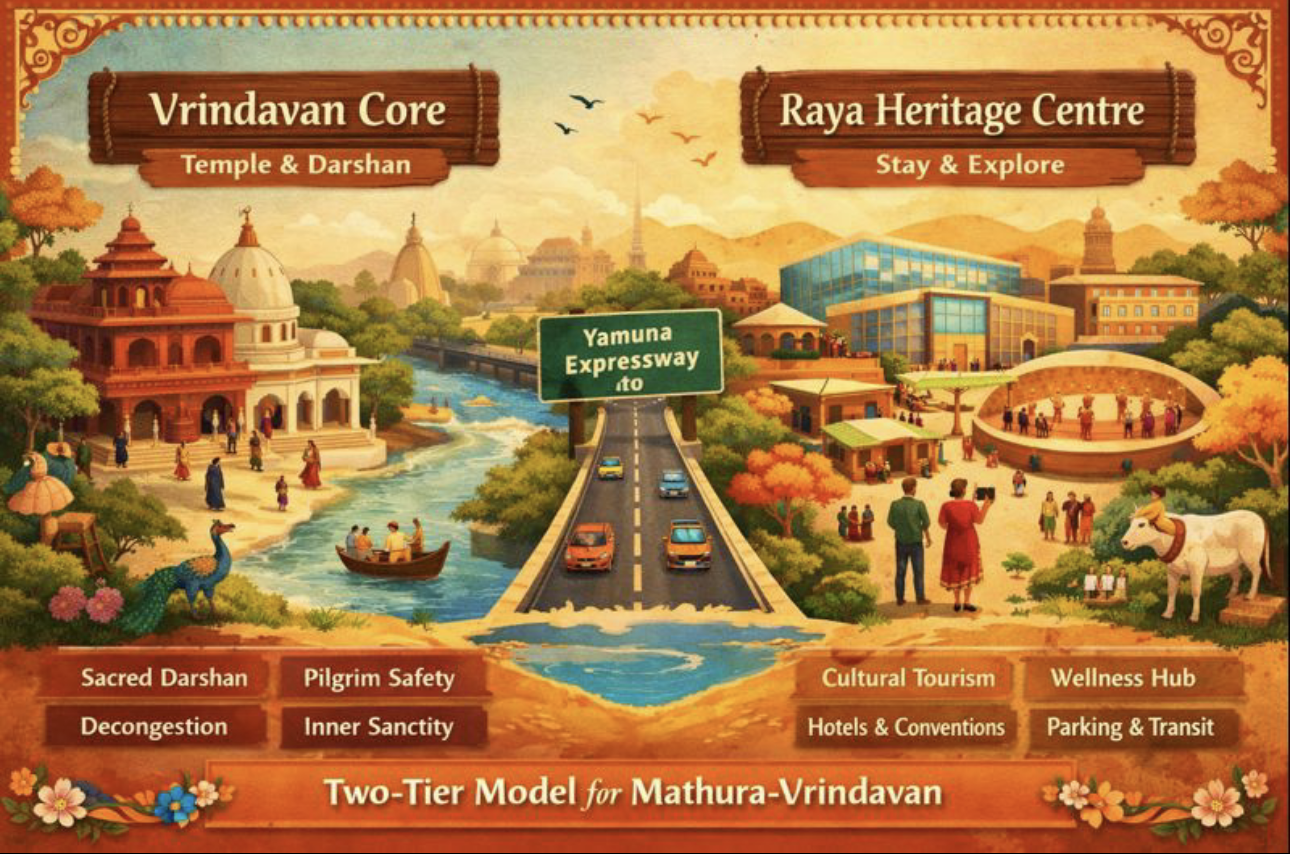
A heritage centre showcasing India’s religious and cultural narratives, Museums, amphitheatres, and cultural performance spaces. Wellness, Ayurveda, yoga, and spiritual retreat facilities. Convention and congregation infrastructure. Hotels, dharmshalas, service apartments, parking, and logistics—at scale. In short, everything pilgrims need, but temples cannot host.
How This Connects to the Bankey Bihari Corridor. The Bankey Bihari Mandir corridor project is focused on the temple core:
Decongesting access roads, improving pilgrim safety, creating orderly movement and amenities, and protecting the sanctity of the inner precincts. The Raya Heritage Centre works at a different altitude.
Think of this as a two-tier spiritual infrastructure model: Tier 1 – Vrindavan Core Darshan, rituals, sacred experience, tightly managed. Tier 2 – Raya Regional Node Parking, stays, cultural immersion, wellness, events, conventions, interpretation.
Pilgrims no longer arrive and leave. They pause, stay, spend, and engage—without overwhelming the temple town.
That’s how mature pilgrimage economies work globally.
Where the Project Stands Today (Ground Reality) This is important—because Raya is not a headline-only announcement.
YEIDA’s official disclosures show that: A new land parcel for the Heritage City has been identified The consultant (CBRE) has been asked to update the DPR The project is moving through Board approval Post-approval, RFP and Concession Agreement documents will be issued Media reports indicate a hybrid development model: Core infrastructure and planning by YEIDA Tourism, hospitality, and heritage assets via PPP Translation: the project is not stalled—it is being structurally prepared for execution.
Why This Matters Beyond Tourism Raya is not just about visitors.
It is about regional economic re-rating.
1. From Day-Trip Darshan to Multi-Day Economy When pilgrims stay longer, the value multiplies: Hospitality Food services Local arts and crafts Transport and guides Events and spiritual programs
2. Jobs That Stay Local Tourism is labour-intensive. Raya’s model spreads income across Mathura district—not just Vrindavan’s inner lanes.
3. Infrastructure-Led Land Value Expansion Expressway access + planned urban centre + cultural anchor = long-term value creation, not speculative spikes.
Why Budget 2026 Changes the Game The Union Budget 2026–27 makes a clear pivot:
Focus on Tier-II and Tier-III cities. Explicit support for temple towns. Introduction of City Economic Regions (CERs) with multi-year funding. This is the missing policy bridge. Mathura–Vrindavan–Raya fits perfectly as a Temple-Economy-led CER, where: Spiritual tourism is the anchor. Culture, services, wellness, and hospitality form the economic layers. Infrastructure precedes monetisation. Under this framework, Raya Heritage Centre is not an add-on—it becomes an implementation asset.
The Strategic Takeaway The future of temple towns is not about building more inside sacred cores. It’s about designing intelligent outer rings that protect sanctity while unlocking economic potential.
If executed well: Vrindavan becomes calmer, safer, and more sacred Raya becomes structured, scalable, investable The region transitions from crowd management to destination management This is not just a tourism project. It is spatial economics applied to faith. And that’s why Raya deserves close attention.