SWAMIH Funds
How India Turned Stalled Housing into a National Recovery Mission
In 2019, India faced a silent crisis in its real estate sector.
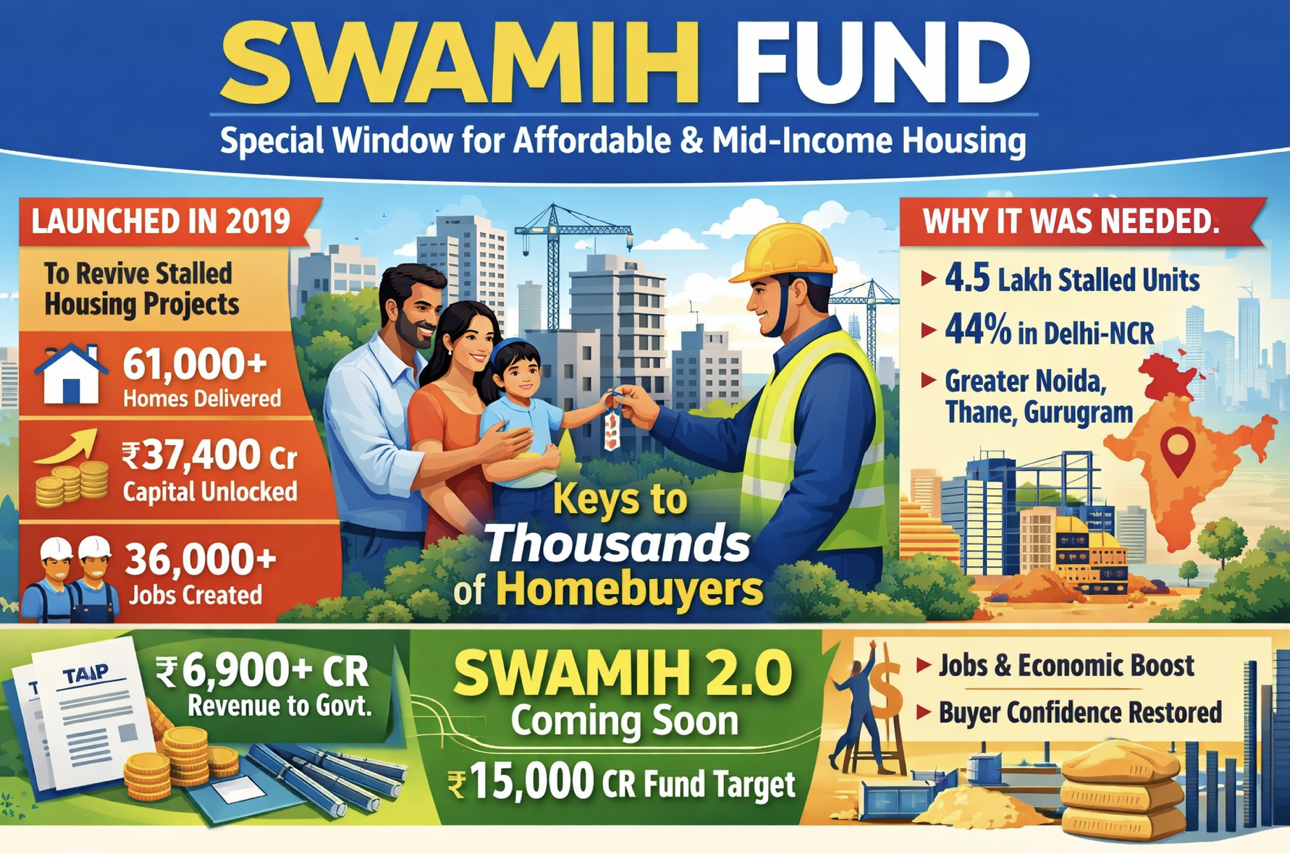
Over 4.5 lakh homes were stalled.
Thousands of middle-class families were paying both EMIs and rent, waiting endlessly for possession.
Developers were cash-strapped.
Banks were cautious.
Confidence was eroding.
That is when the Government of India introduced the SWAMIH Fund — the Special Window for Affordable and Mid-Income Housing.
What Was the Objective?
Launched in November 2019, SWAMIH was designed as a last-mile funding platform — not to refinance bad loans, not to rescue developers blindly — but to complete projects that were financially viable yet stuck due to liquidity stress.
The mandate was clear:
• Fund RERA-registered projects
• Focus on affordable and mid-income housing
• Support only net-worth positive projects
• Ensure funding is used strictly for completion
This was not a bailout.
It was a structured resolution mechanism.
What Has SWAMIH Achieved So Far?
As of December 2025:
• 61,000+ homes delivered
• 110 projects completed
• 145+ projects across 30 cities
• ?37,400 crore capital unlocked
• 36,000+ jobs generated
• ?6,900+ crore revenue added to government coffers
• 20 lakh tonnes of cement demand revived
• 5.5 lakh tonnes of steel consumed
And importantly — over 7,000 EWS units delivered, reinforcing its social commitment.
For thousands of families, this meant something simple but powerful:
Keys. Possession. Closure.
Why Was It Needed?
At one point, India had:
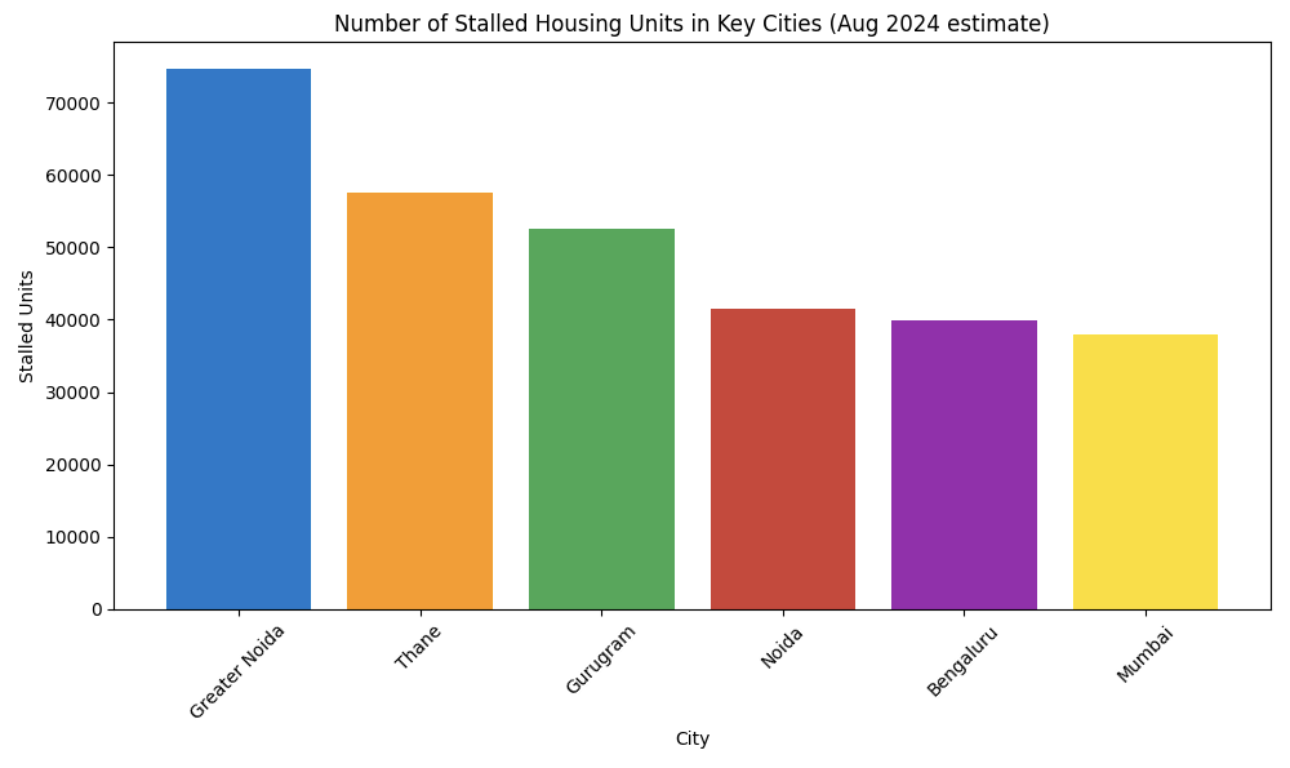
• Nearly 5 lakh stalled housing units
• 44% concentrated in Delhi-NCR alone
• Greater Noida, Thane and Gurugram are leading in stuck inventory
Stalled housing is not just a developer problem.
It locks household savings, freezes bank capital, damages city ecosystems, and destroys buyer confidence.
Completing stuck homes is as critical as building highways.
SWAMIH reframed housing completion as infrastructure recovery.
But Is It Enough?
Here is the hard truth.
Even with 61,000 homes delivered, India still has a significant backlog.
SWAMIH Fund I addressed a fraction of the total stalled inventory.
Eligibility filters — such as “net worth positive” and affordability thresholds — exclude severely distressed projects.
That is why the Union Budget 2025–26 announced SWAMIH Fund II — a ?15,000 crore blended finance facility aimed at completing another 1 lakh homes.
The model is evolving.
But the scale of the problem remains large.
What This Means for Real Estate Stakeholders For homebuyers → It restored faith.
For banks & NBFCs → It improved stressed asset recovery.
For developers → It created accountability-linked financing.
For the economy, → It revived a frozen multiplier sector.
SWAMIH is not just a fund.
It is India’s first structured national attempt to resolve housing stress through institutional capital discipline.
And if refined, it could become a permanent feature of India’s real estate risk architecture.
The Big Question Will SWAMIH evolve into a recurring mechanism for housing stabilisation?
Or remain a one-time corrective intervention?
The answer will define the next decade of India’s housing growth story.